LED Light Therapy Facial Cost Guide 2026: Pricing & Results
LED light therapy facials cost $75-$280 per session in 2026. Red light targets aging, blue light treats acne. See pricing by setting, panel type, and results.
What does an LED light therapy facial cost in 2026?
LED (light-emitting diode) facials sit at the intersection of skincare and dermatology, and the price you pay reflects both the panel quality and the practitioner credentials. The session price range across US providers is wide: $75 at a basic spa add-on to $280 at a medical aesthetic practice using FDA-cleared medical-grade panels like Celluma PRO, LightStim Pro, or Omnilux Contour. The 2024 US LED therapy market crossed $410 million in spa and medspa revenue and is projected to top $720 million by 2027 as red-light panels go mainstream in dermatology and at-home use.
Across Zoca's Facial Finders network of 1,100+ licensed estheticians and dermatology providers in 80 US cities, 64% of facial menus now include an LED add-on or stand-alone session. The challenge for clients is that "LED facial" can mean a $35 spa add-on with consumer-grade red light or a $250 stand-alone session with a wavelength-calibrated medical panel — and the results gap is real. This guide breaks down what each price tier actually delivers, what wavelength you need for your concern, and how to spot a session that is worth the spend.
For pairing with other facial types, see our HydraFacial vs glass skin facial comparison, oxygen facial benefits and cost, and exosome facial primer.
Pricing snapshot by setting
| Setting | Single Session | 6-Pack Bundle | 10-Pack / Series | Panel Tier |
|---|---|---|---|---|
| Spa add-on (after facial) | $25-$60 | N/A | N/A | Spa-grade |
| Stand-alone spa session | $75-$130 | $400-$680 | $640-$1,080 | Spa or pro |
| Boutique medspa | $130-$200 | $680-$1,050 | $1,050-$1,650 | FDA-cleared medical |
| Dermatology clinic | $180-$280 | $950-$1,500 | $1,500-$2,400 | FDA-cleared medical (often paired with topicals) |
| Membership packages | $59-$129/mo | Often unlimited | Best per-session value | Varies by tier |
Medical-grade panels (Celluma, LightStim Pro, Omnilux Contour, Dermalux LED) deliver 3-5 times more measurable photon output per session than spa-grade panels and are the only ones FDA-cleared for specific clinical claims. Spa-grade panels can still deliver mood and surface-glow benefits but won't produce the same collagen response measurable in dermatology studies.
Wavelengths and what they treat
| Wavelength | Color | Penetration | Best For | Sessions for Visible Result |
|---|---|---|---|---|
| 415-470 nm | Blue | Surface (epidermis) | Active acne, C. acnes | 4-8 sessions over 4 weeks |
| 525-560 nm | Green | Surface to mid-epidermis | Pigmentation, melasma, redness | 6-10 sessions |
| 590-595 nm | Yellow / amber | Mid-epidermis | Rosacea, sensitive skin, lymphatic | 6-8 sessions |
| 630-660 nm | Red | Dermis (1-3 mm) | Collagen, fine lines, wound healing | 8-12 sessions |
| 800-830 nm | Near-infrared | Subcutaneous (3-5 mm) | Deep wrinkles, inflammation, sub-dermal collagen | 10-16 sessions |
Most professional sessions combine 2-3 wavelengths in sequence. Red plus near-infrared is the standard anti-aging combination; blue plus red is the acne combination. Single-color spa sessions are the budget option.
What does a session look like?
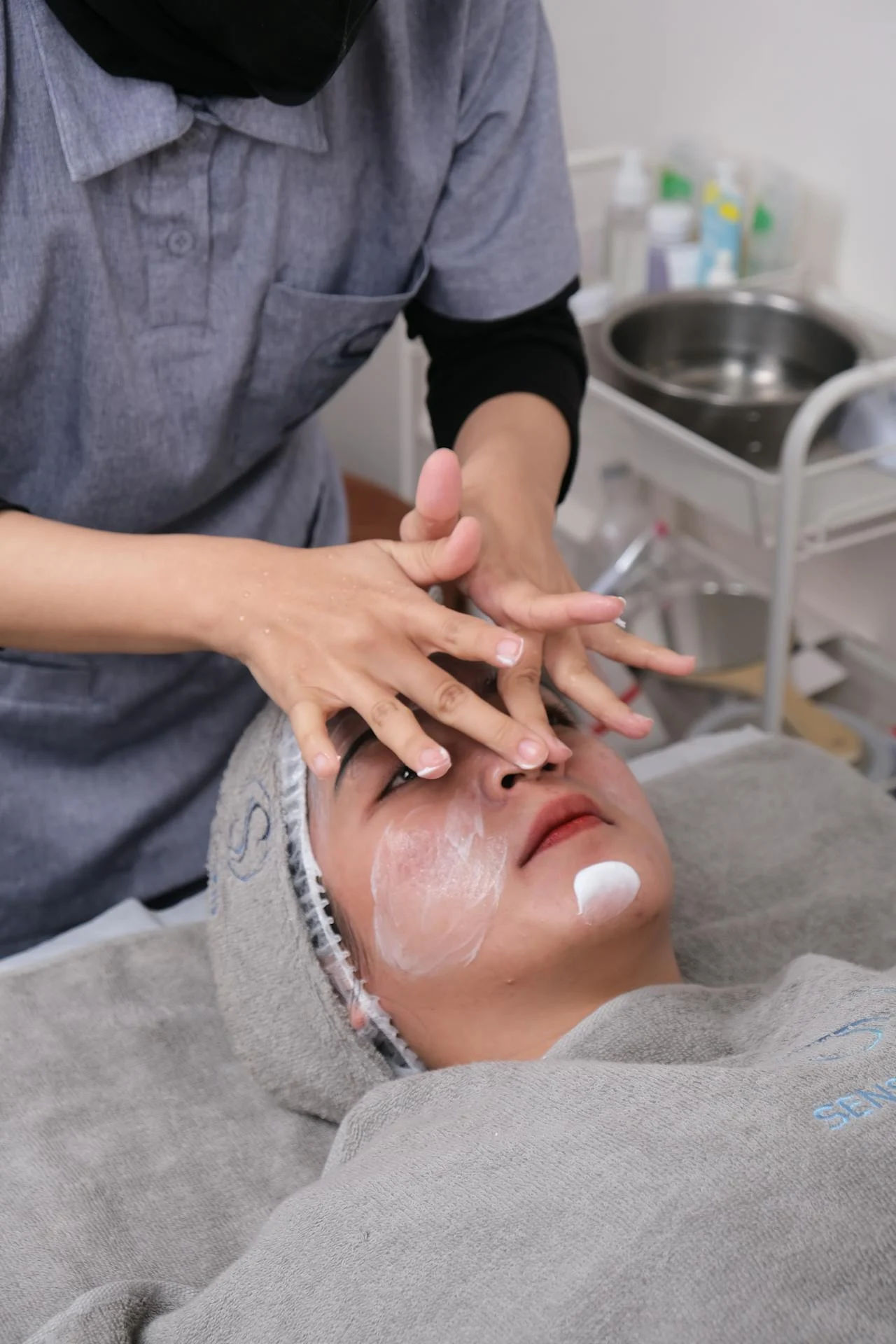
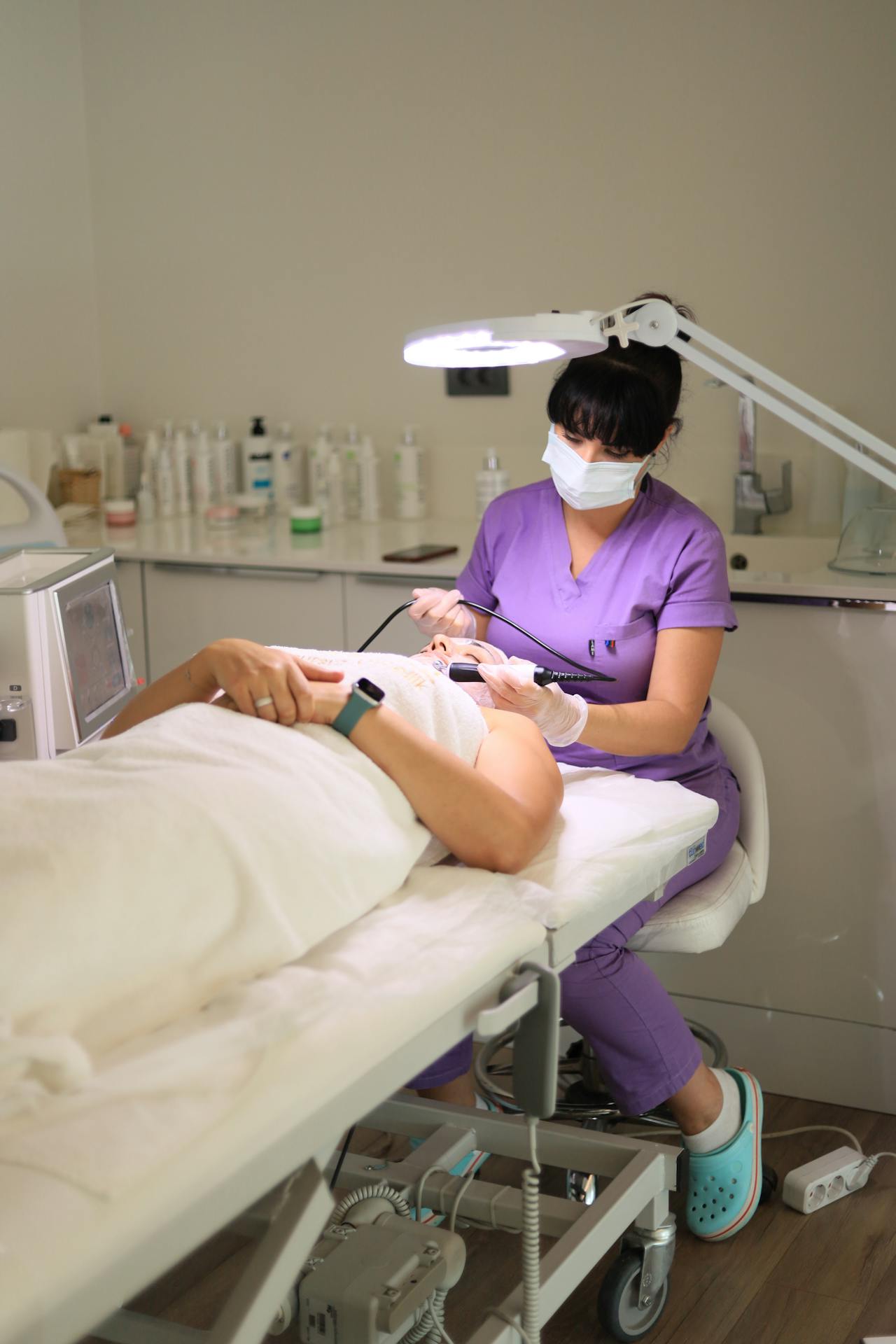
A stand-alone LED facial runs 30-50 minutes total: 5-10 minutes of cleanse and prep, 20-30 minutes under the panel, 5-10 minutes of post-treatment serum and SPF application. Most providers ask the client to wear protective goggles and a thin gel layer with no makeup. The light feels mildly warm; some report a faint mood-lift from the red wavelengths. There is no downtime.
Results timeline
After 1 session
Flush of pink-tone skin tone, slight reduction in visible redness, and a mild glow lasting 24-72 hours. About 18% of network first-time clients report a same-day skin-mood lift consistent with parasympathetic nervous system activation under red light.
After 4-6 weekly sessions
Measurable acne reduction (blue/red combination shows a 56-72% reduction in inflammatory acne lesions in dermatology studies). Skin texture improvement and surface glow become visible.
After 8-12 weekly sessions
Fine lines on the forehead, eye area, and nasolabial folds soften measurably. Collagen production rises an estimated 15-25% per dermatology research aggregated by the American Society for Dermatologic Surgery (ASDS). Maintenance sessions every 2-4 weeks preserve gains.
Annual cost projections
| Goal | Sessions | Panel Tier | Annual Cost |
|---|---|---|---|
| Active acne reduction | 8-12 in first 8 weeks + monthly | Medical-grade blue + red | $1,400-$2,800 |
| Anti-aging maintenance | 12 in first 12 weeks + bi-weekly | Medical-grade red + NIR | $2,200-$3,800 |
| Spa-grade glow only | 12 sessions monthly | Spa-grade | $900-$1,560 |
| Membership unlimited | 4-8 sessions/month | Mixed-tier | $708-$1,548 |
| At-home device + monthly pro | 1 pro session monthly | Mixed | $1,200-$2,400 (year 1) |
At-home FDA-cleared LED masks (Omnilux Contour, CurrentBody Skin LED, Dr. Dennis Gross SpectraLite) cost $350-$650 one-time and deliver about 50-70% of the photon dose of a clinical session per use. The math: a $475 at-home device pays back a $130 monthly stand-alone facial in 3-4 months for daily users.
Who is the best candidate?
Who should skip or get medical clearance?
How to spot a real medical-grade session
How to find a credentialed provider
Look for an active state esthetician license plus manufacturer-specific certification (Celluma Provider, LightStim Certified, Dermalux trained, Omnilux Provider). For dermatology-grade results, look for a board-certified dermatologist (FAAD) or a registered nurse (RN) under physician supervision. About 71% of network LED providers carry at least one manufacturer-specific certification beyond their base license. Browse top-rated estheticians and medspas in California and Texas on the Facial Finders directory, and compare with our post-facial sun protection guide, polynucleotide PDRN salmon DNA facial primer, and summer skin reset guide.
Final thoughts
LED light therapy facials cost $75-$280 per session in 2026, with the panel tier driving the result gap more than any other variable. Medical-grade panels at boutique medspas and dermatology clinics deliver measurable acne, collagen, and texture improvements; spa-grade add-ons deliver glow and mood benefits without the dermatology-study claims. Match the wavelength to your concern (blue for acne, red for aging, yellow for rosacea), book at least 8-12 sessions for visible anti-aging results, and confirm the panel name and provider credentials before paying. Facial Finders' directory tags providers by manufacturer training across 80 US cities so you can find a session that earns its price.
Discover More Top-Rated Services
Complement your facials and skincare experience with these related services:
Sources & references
- Light Therapy for Skin Conditions — American Academy of Dermatology
- FDA Guidance — Low-Level Laser and LED Devices — U.S. Food and Drug Administration
- Photobiomodulation in Dermatology — American Society for Dermatologic Surgery
Frequently asked questions
How much does an LED light therapy facial cost in 2026?
How many LED sessions do I need to see results?
What's the difference between spa-grade and medical-grade LED?
Does LED therapy actually work for acne?
Is LED light therapy safe during pregnancy?
Can I do LED light therapy at home instead?
What wavelength of red light is best?
Are there side effects from LED light therapy?
How long does each LED session take?
What credentials should my LED provider hold?
Need a provider in Nationwide?
Browse our directory and book directly with local businesses.
Browse the directoryRelated articles
Best Skincare in Arizona — 2026 Guide
Everything you need to know about skincare & facials in Arizona — from choosing the right service to finding providers locals actually recommend. Pricing, FAQs, and booking links included.
Best Skincare in California — 2026 Guide
Everything you need to know about skincare & facials in California — from choosing the right service to finding providers locals actually recommend. Pricing, FAQs, and booking links included.
Best Skincare in Chicago, IL — 2026 Guide
Everything you need to know about skincare & facials in Chicago, IL — from choosing the right service to finding providers locals actually recommend. Pricing, FAQs, and booking links included.